
Let’s talk about something glossy outdoor photos rarely show: fear. Not the dramatic kind, but the quiet anxieties that keep us from fully enjoying nature—the unease of exposure, the vulnerability of sleeping off the ground, and the awkward worry of looking silly when trying something new. If you’ve ever hesitated to leave the certainty of your tent or chair, you’re not alone. But what if that leap of faith could become your most grounding tool? Enter the humble hammock: more than gear, it’s a simple way to gently stretch your comfort zone, build confidence, and shift how you face fear.
This isn’t about reckless abandon. It’s about intentional, incremental steps. Think of your hammock not as a thrill ride but as a suspended training ground. It provides a unique, controlled environment to practice being comfortably vulnerable in nature. The process of trusting a few straps and a piece of fabric can quietly teach you to trust yourself and your surroundings in new ways. Let’s explore how this simple swing can be your partner in building outdoor resilience.
Step 1: The Grounding Ritual – Mastery Over the Basics
Anxiety often thrives in uncertainty. The first step to dissolving it is to replace mystery with competence. This starts on home turf, long before you hit the trail.
Your mission: become a hanging ninja in your backyard or local park. This is where you learn the satisfying, simple mechanics. Find two sturdy trees. Practice with the straps. The goal isn’t just to hang it but to understand how it works—to see with your own eyes how the wide webbing distributes weight and the robust stitching holds strong. This hands-on knowledge is your first layer of armor against fear. When you know how your safety system works, the “what ifs” start to lose their power. A model designed for intuitive use is key here. One with color-coded straps or simple buckles that make setup foolproof can turn a potential stressor into a 3-minute confidence-building ritual.
Step 2: The Low & Slow Approach—Redefining “Risk”
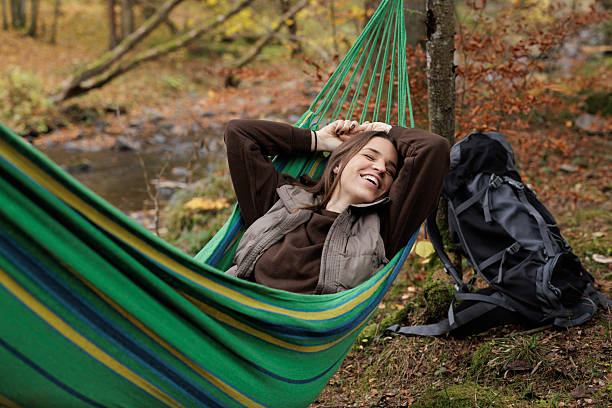
The instinct might be to hang your hammock high for the best view. Resist it. Start by hanging it comically low—so low that your butt is practically brushing the grass when you sit in it. This isn’t childish; it’s brilliant psychology.
Sit in it. Swing gently. Lie back. The point is to let your body and mind acclimate to the sensation of being supported off the ground while the ground remains intimately close. There’s no fall, only a gentle sit. Do this repeatedly. Read a book. Have a coffee. The hammock becomes not a symbol of height, but a new kind of chair. You’re not conquering a fear of heights; you’re erasing the distinction by making the experience utterly benign and pleasant. This stage is about building positive, boring associations. Comfort and safety become the only memorable takeaways.
Step 3: The Mindful Minute – Breathing in the Sway
Once you’re comfortable lounging, introduce a short mindfulness practice. Set a timer for five minutes. Get in your hammock, close your eyes, and focus on the physical sensations.
Feel the fabric cradle your spine. Notice the gentle, rhythmic sway initiated by your own breath or a soft breeze. Listen to the sounds around you without labeling them. When a worried thought arises (“this strap looks thin…”), acknowledge it without judgment and gently bring your focus back to the feeling of support beneath you. This practice does two things: it associates the hammock with a state of calm focus, and it trains your mind to observe anxious thoughts without being hijacked by them. The rocking motion itself can be deeply calming, acting as a natural metronome for a racing mind.
Step 4: The Gradual Ascent—Building Height with Habit
Only after you’re thoroughly bored with your low-hung haven should you incrementally raise it. Go up six inches. Spend an afternoon there. Then another foot. The change should be so gradual it’s almost imperceptible. Each height is just a new version of the same, now-familiar, safe experience.
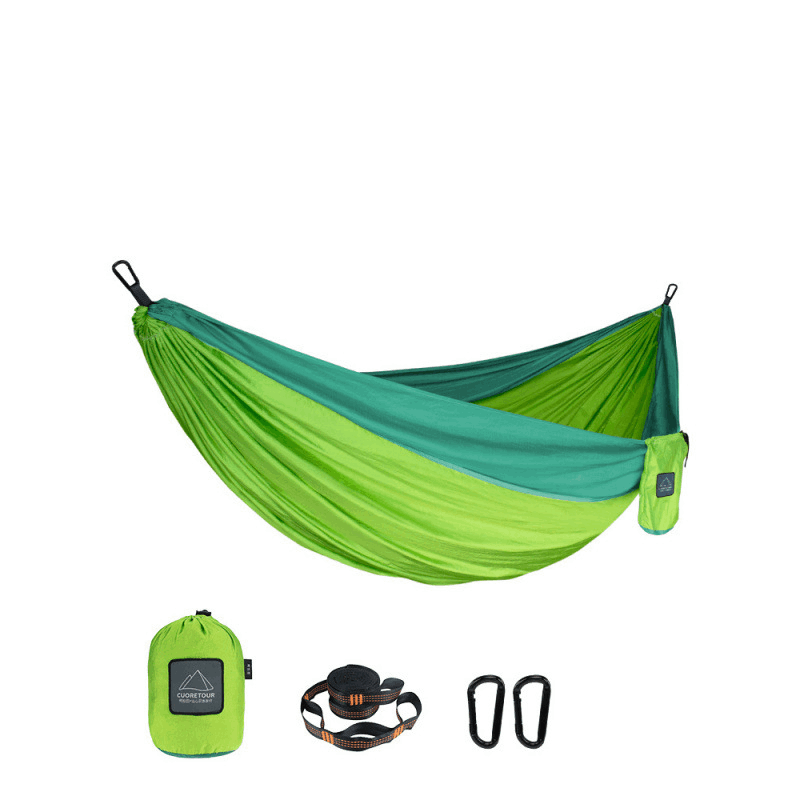
This is where trust in your gear truly matters. You need to know, not just hope, that your setup is solid. For this kind of journey, I’d rely on something built for dependable performance, like the Ultra-Light Travel Hammock. Its design removes the little uncertainties an anxious mind can fixate on. Triple stitching isn’t an abstract claim—it’s visible, redundant security. Aluminum hooks and high-strength climbing ropes feel secure in your hands. Being designed for real adventurers, not just backyard use, builds quiet confidence, letting you focus on the experience, not the equipment.
Step 5: Translating the Practice to the Real World
Now, take this cultivated confidence on a real camping trip. Your first outdoor hang should be in a familiar, friendly setting—a car-accessible campground, perhaps. You’ve done this drill a dozen times. The trees are different, but the ritual is the same: careful inspection, methodical setup, and a low initial hang.
When you finally lie back that first night, listening to the unfamiliar sounds of the forest, you’ll have a toolkit you didn’t have before. You’ll know the solid feel of your setup. You’ll have the practiced ability to focus on your breath and the gentle sway instead of the “what ifs.” The hammock is no longer a scary novelty; it’s your personal, portable safe space, a capsule of familiarity you’ve brought into the wild. Its quick-drying fabric and compact pack (smaller than a water bottle) mean it’s an easy, non-burdensome companion on this psychological journey.
The Greater Reward: A New Relationship with the Outdoors
This process isn’t really about the hammock. It’s about using it as a deliberate tool to rewrite your own narrative. You move from “I’m scared of being off the ground” to “I know how to safely suspend myself and enjoy the view.” The confidence gained here bleeds into other areas. It builds a sense of self-reliance. It proves that fear can be managed not by avoiding it, but by approaching it with patience, knowledge, and a good plan.
The outdoor hammock, in this light, stops being just a piece of recreational equipment. It becomes a teacher of patience, a platform for mindfulness, and a surprisingly effective bridge between anxiety and awe. It shows you that sometimes, the bravest thing you can do is to gently, deliberately, learn to rest in a new way.
Start your journey to confident relaxation. Explore our trusted hammock designed for mindful outdoor adventures today.