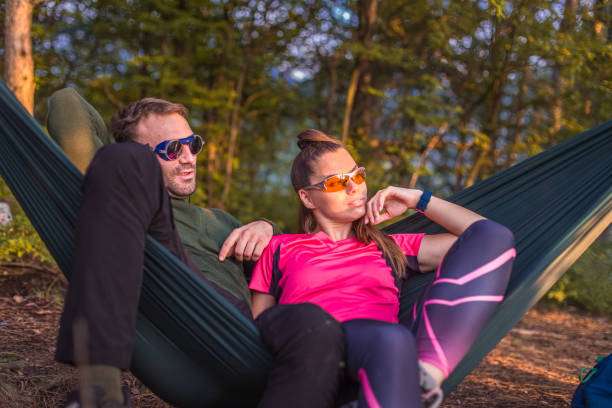
The Ultimate Outdoor Hammock Buying Guide for Comfort and Safety

Walk into any outdoor gear store or browse an online mall, and you’ll find a dizzying array of outdoor hammock options.
From simple net pockets costing dozens of yuan to professional systems costing hundreds, from ultralight backpacker models to luxury versions with canopies—which one should you choose?
Many people end up ordering based on intuition or aesthetics, only to discover it doesn’t fit their actual needs—either it’s too heavy to carry, too small for comfort, or lacks key features.
Choosing the right outdoor hammock is far more complex than just picking a color. It concerns your safety, comfort, and happiness during outdoor relaxation for years to come.
Today, we will thoroughly deconstruct the logic of hammock selection to help you build a clear decision-making framework, ensuring you find that “meant-to-be” swinging partner, whether it’s your first purchase or an equipment upgrade.
Step 1: Define Your Core Scenario—The Foundation of All Choices
Before considering any parameters, ask yourself, “Where and with whom will I primarily use this hammock?”
The answer will lead you toward completely different product categories:
- Solo Backpacker/Hiker: Your core demand is extreme lightweight and compact volume. Weight is measured in grams, and it should ideally pack down smaller than a water bottle. Material must be quick-drying and tear-resistant.
- Family Leisure/Park Camping: Comfort, space, and load capacity are top priorities. You’ll need a wider hammock (usually double size) with soft fabric and a capacity of 300 kg or more to accommodate you and a child.
- Multi-day Camping/Bushcraft: You need a balance of durability, protection, and comfort. Integrated mosquito nets are a game-changer, and the fabric requires high UV and moisture resistance.
- Balcony/Backyard Fixed Use: Focus on aesthetics and ultimate skin comfort. You can choose exquisite weaves or skin-friendly fabrics and even consider pairing it with an independent stand.
Step 2: Deconstructing Key Parameters—Becoming a Semi-Expert
Once the scenario is clear, we can dive into the details. Here are the hardcore indicators that determine a hammock’s quality:
1. Material and Fabric: Touch, Strength, and Weight
- Nylon: The absolute market mainstream. It is light, strong, and quick-drying. Different “D” numbers (Denier) indicate thickness; backpacking models use low D (e.g., 20D) for lightness, while leisure models use high D (e.g., 70D) for durability and softness.
- Canvas: Heavier, thicker, with minimal stretch. It provides flat, mattress-like support but is bulky and slow to dry, making it suitable only for fixed locations.
2. Size and Load Capacity: The Numbers Game of Comfort and Safety
| Parameter | Standard Specs | Expert Advice |
|---|---|---|
| Size | Single (2.7m x 1.4m) / Double (1.6m-2m+ wide) | When in doubt, choose the double size for luxury diagonal lying space. |
| Load Capacity | 180 kg to 300 kg+ | Solid classic models reaching 300 kg offer a massive safety margin for peace of mind. |
“Never challenge or settle for the nominal weight limit; leaving a margin is a basic principle of outdoor safety.”
3. Suspension System: The Key to Easy Setup
This is the part most easily underestimated by beginners. A good system makes setup effortless and enjoyable.
- Ropes: Should be strong, wear-resistant, and non-slip.
- Hardware: Aviation-grade aluminum carabiners are preferred for being light yet incredibly strong.
- Tree Straps: Wide, non-slip straps are a sign of professionalism and environmentalism, protecting the bark while ensuring a “one-minute installation.”
4. Additional Features: Order as Needed
- Integrated Mosquito Net: Essential for lake or forest camping; it turns a hammock into a sleepable shelter.
- Storage Bag: A well-designed bag turns a chaotic mess of ropes into a neat, portable pouch.
Anatomy of a Classic All-Rounder: Why It Fits Most People

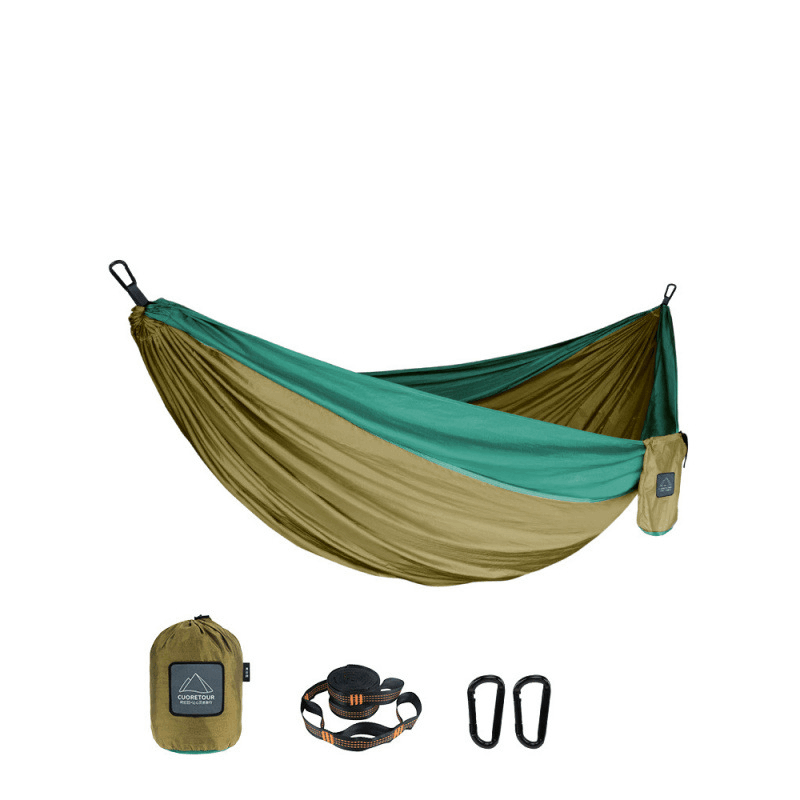
Take a popular classic outdoor hammock as an example. Its core advantage lies in its “well-balanced performance”: utilizing soft, breathable nylon fabric to ensure premium touch and durability; offering a double-size footprint for spacious rest; and providing a high 300 kg load capacity for safety.
More importantly, it considers the complete user experience: equipped with a portable storage bag.
This means after enjoying the sun and breeze, you can easily pack it away, making “relaxation” truly portable. Whether reading in the backyard, napping during a hike, or vacationing at the beach, it quickly creates a comfortable personal sanctuary.
Ready to upgrade your outdoor experience? [Explore Our Recommended Professional Hammock Collection]
Frequently Asked Questions (FAQ)
Q: For my first purchase, should I buy a single or double hammock?
A: Unless you are strictly pursuing ultralight backpacking, it is strongly recommended to start with a double model. The extra width allows for a more comfortable diagonal lay (closer to lying flat) and provides the possibility for shared use with partners, children, or pets.
Q: How much safety margin should I leave for the weight limit?
A: Industry practice suggests that the total weight of you and your gear should ideally not exceed 80% of the nominal limit. For a 300 kg rated hammock, daily use should stay below 240 kg. This provides a buffer for dynamic impacts (like sitting down) and material aging.
Q: Can I tie the hammock directly to a tree? Will it hurt the tree?
A: Please avoid using thin ropes directly on trees, as they can strangle or kill the bark. The responsible approach is to use wide tree straps (usually 2.5 cm or wider). This disperses pressure and is a key practice of “Leave No Trace” outdoor ethics.
Conclusion: Care is an Extension of Love and Wisdom
Choosing an outdoor hammock is like choosing an outdoor partner. It doesn’t need the flashiest features, but it must be reliable and compatible, offering a perfect embrace when you need it.
By identifying your core scenario and understanding the meaning behind key parameters, you can see through marketing jargon and make a wise choice.
A good hammock’s value is not in a numbers race on a spec sheet, but in whether it allows you to step into nature more easily and frequently.
It could be your second sofa on the balcony, a secret rest station in your backpack, or the joy center of a family camp. From today, arm yourself with knowledge and pick the hammock that truly belongs to you. When you sway gently in the breeze, all the comparison and selection will turn into a smile of satisfaction.
Discover lightweight outdoor hammock solutions for backpacking, camping, and backyard lounging that balance comfort, safety, and durability.