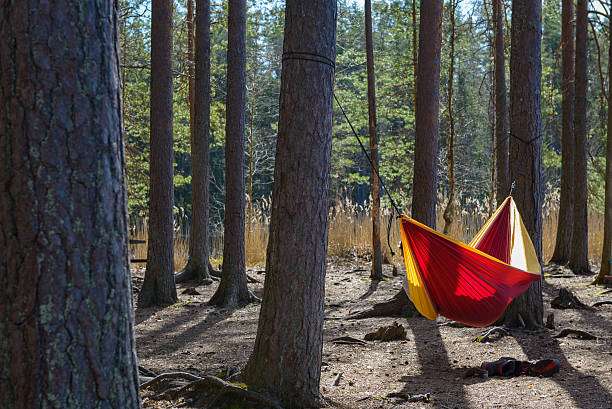
5 Common Hammock Mistakes Beginners Make and Easy Ways to Avoid Them

We have all had this fantasy: gently swaying between trees, a light breeze brushing past, sunlight filtering through the leaves and casting dappled shadows—a perfect outdoor hammock scene.
But reality is often very different: you spend fifteen minutes wrestling with a pile of ropes, finally lie down, only to feel like a banana folded in half. Ten minutes later, you crawl out with an aching lower back, swearing never to touch the thing again.
Don’t give up. You may be just a few avoided beginner “pitfalls” away from the perfect hammock experience. As an outdoor enthusiast who has swayed between countless tree branches, I have compiled the five most common mistakes. Avoid them, and you can instantly graduate from a “hammock sufferer” to an “aerial relaxation master.”
Mistake One: Being “Indiscriminate” About Trees

The first and easiest mistake beginners make is being too impatient when choosing hanging points. That slightly crooked sapling? That old park tree with bark almost falling off? No, my friend—they are not your friends.
Choosing unhealthy, overly thin, or unstable trees is not only dangerous but also irresponsible toward nature. Thin trunks may not support your weight, and damaged old trees can suffer even more serious harm as a result.
The Right Approach
- Look for healthy, thick, vigorous trees.
- The ideal trunk diameter should be at least comparable to your thigh (about 20 cm or 8 inches or more).
- Wrap your arms around the trunk—if it feels solid and stable, that is a good sign.
- Be sure to check for visible cracks or signs of rot.
Remember, you are looking for a solid partner, not a fragile support.
Mistake Two: Hanging the Hammock Like a “Clothesline”
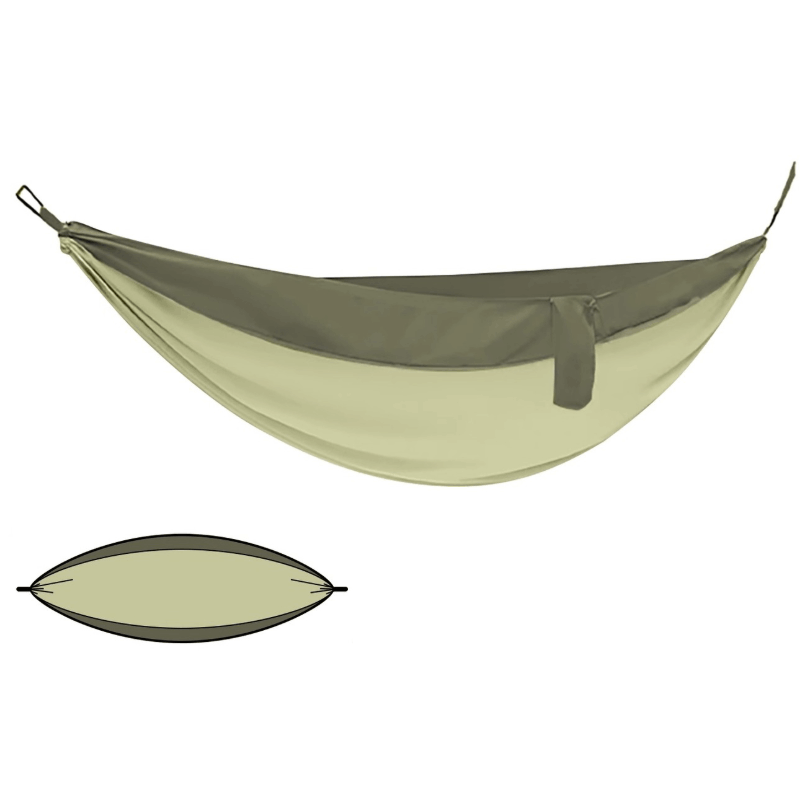
This is the number-one culprit behind the infamous “banana-shaped” discomfort. Many people mistakenly believe a hammock should be pulled tight like a trampoline.
When you stretch both ends straight, the hammock cannot form the ergonomic curve that allows you to lie comfortably. You end up wrapped in the middle like a burrito, your back under unnatural pressure, with relaxation completely out of the question.
The Right Approach: Embrace the “30-Degree Rule”
The ideal setup allows the center of the hammock to sag naturally. A simple rule of thumb: when the swing bed is hung but not yet weighted, the suspension straps should form an angle of about 30 degrees with the ground.
This angle ensures enough slack to create a wide, flat lounging area.
At this point, choosing a well-designed outdoor hammock becomes especially important. For example, a classic outdoor hammock usually comes with a sufficiently long suspension system, making it easy to adjust tension and find that perfect curve.
You do not need to stress over math—just let it look like a gentle smile rather than a piece of stretched dental floss. Once you experience this just-right setup, there is no going back.
Explore beginner-friendly outdoor hammocks designed for perfect hang angles
Mistake Three: Lying Straight Like You’re on a Bed
If you lie in a hammock the same way you lie in your bed—your body parallel to the long edges—you will inevitably feel cramped and unstable, curling up without even realizing it.
The magic of a hammock lies in its suspension. When you lie straight, the fabric wraps and squeezes you from both sides, forcing your spine into an unnatural C-shape.
The Right Approach: Lie Diagonally to Unlock Flat Space
This is the single most important hammock technique. After getting into the swing bed, adjust your body along the diagonal. Simply put, let your head and feet point toward opposite corners.
Something magical happens: under your body’s tension, the fabric spreads outward, instantly creating a nearly flat, cradle-like support surface.
Your back receives even support, and your entire body can fully relax. It may feel a little strange at first, but after a few adjustments, once you find that most open angle, you will be amazed by the comfort.
Mistake Four: Completely Ignoring Weather and Environment
Outdoor conditions are unpredictable. Lying directly in a hammock without any protection can lead to small but annoying problems.
- Nylon fabric under direct sun can become scorching hot.
- Sudden rain showers can catch you off guard.
- Small insects or falling leaves may disturb your rest.
While we cannot control nature, we can respond intelligently.
The Right Approach: Be a Prepared “Lounger”
Spend one minute checking the weather forecast before heading out. If the sun is intense, choose a shaded spot or consider using a lightweight sun tarp.
Carry a quick-dry microfiber towel. It can wipe away sweat, and if there is morning dew or light rain on the hammock, it dries things quickly.
If your hammock fabric has UV-resistant properties, you are already ahead of the game when it comes to sun exposure. Quick-drying and moisture-resistant features also help you stay calm and comfortable in changing weather.
Mistake Five: Treating the Compact Stuff Sack as a “Freebie”
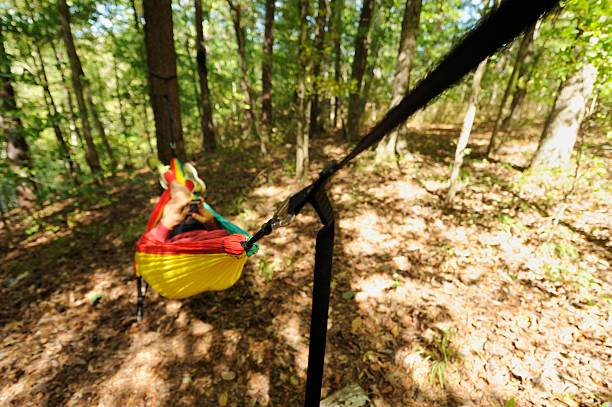
Many beginners think the small bag that comes with the hammock is just an unimportant piece of packaging. After the excitement of the first unboxing, it often disappears without a trace.
Then, when it is time to pack up or use the hammock again, there is no proper container. Stuffing it randomly into a backpack leads to a tangled “knot monster,” making the next setup a frustrating experience.
The Right Approach: Treat the Stuff Sack as an Essential Part of the Hammock
This bag is a carefully designed time-saver. Proper storage not only protects the hammock fabric from unnecessary abrasion and snags but also lets you enjoy the smooth feeling of “grab and go” next time.
Storage is simple:
- Start from one end and roll the swing bed neatly, like a sleeping bag.
- At the same time, coil the suspension straps in an orderly way.
- Place the rolled hammock into the stuff sack and tighten the drawstring.
With practice, the whole process takes less than one minute. Develop the habit of “from where it came, back it goes,” and both your hammock’s lifespan and your user experience will be greatly extended.
You Might Be Wondering…
| Question | Answer |
|---|---|
| After following these tips, how long can an outdoor hammock last? | This largely depends on the quality of the hammock and how you care for it. A high-quality outdoor hammock made of durable nylon with solid stitching, when used normally and stored properly, can easily last through several, or even more than ten, outdoor seasons. It is more like an investment than a disposable item. |
| Once I master these, can I try sleeping overnight in a hammock? | Daytime lounging and overnight camping are two different levels. The tips in this article are enough for perfect afternoon naps or reading time. For overnight use, you also need to consider insulation (hammock pads or underquilts), insect protection (integrated or add-on bug nets), and weather protection (tarps). Take it step by step—become a daytime hammock expert first. |
The path to a perfect outdoor hammock experience is not filled with obstacles; it is often just a thin layer of misunderstanding.
Once you understand its “temperament”—for example, its preference for loose suspension and diagonal lying—you will discover that it is actually one of the most forgiving and comfortable companions in the outdoor world.
If you are looking for a reliable “first” hammock partner, start with products that feature classic design and easy setup. A good outdoor hammock should let you focus on enjoying the gentle sway and natural scenery, rather than struggling with complicated setups and discomfort.
After all, we are chasing relaxation—not another challenge, right?