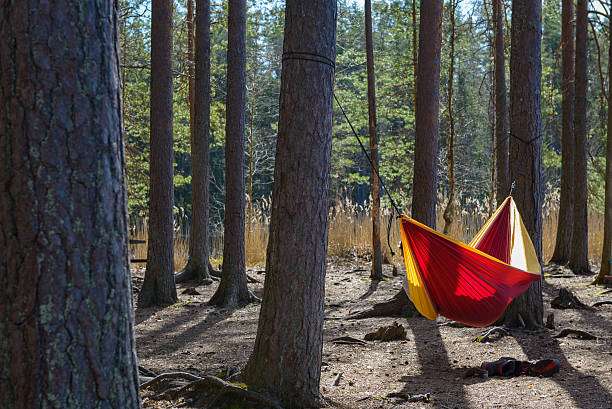
Don’t Let Leisure Turn into Danger: A Safe Outdoor Hammock Guide

Have you ever scrolled through social media and seen a video like this: A seemingly relaxing afternoon where someone is lounging comfortably in a hammock, and the next second, due to a broken suspension point or unstable installation, they slam into the ground? The laughter ends abruptly in embarrassment and pain.
These heart-stopping clips are not just entertainment; they sharply point out a problem ignored by most users: outdoor hammock safety.
Indeed, an outdoor hammock should bring a sense of healing, suspended in a breeze, not a nerve-wracking adventure. The fact is, if used improperly, this relaxation tool hides real risks—from minor falls to severe tree damage or even personal injury.
Today, we don’t want to be alarmist; we simply want to talk to you seriously and professionally about how to enjoy a hammock safely.
After all, true relaxation stems from 100% peace of mind.
Dangerous “Leisure”: Common Hammock Safety Hazards
Before we learn the correct methods, let’s recognize the “enemies.” Most hammock accidents stem from these overlooked details:
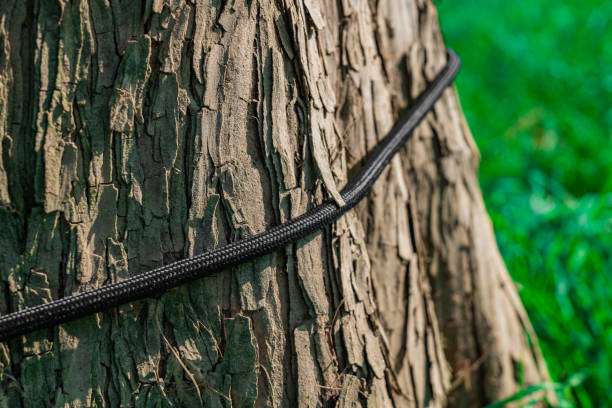
- “Tree Killers” and “Suicidal” Hanging: Using thin cords or unprotected ropes directly on trees can severely girdle or even kill the bark (known as “tree ringing”). It also risks a sudden fall due to rope slippage. Even more dangerous is choosing unhealthy, dead, or spindly trees as anchors.
- Weight Capacity Illusion: Mistaking the “rated capacity” for a static safety value while ignoring dynamic impact. The moment you “plop” into a hammock, the force generated is far greater than your body weight.
- Improper Installation Geometry: Hanging a hammock too tight (like a taut bandage) creates poor lateral stability, leading to easy flipping; hanging it too loose (nearly touching the ground) makes getting in and out difficult and causes back discomfort.
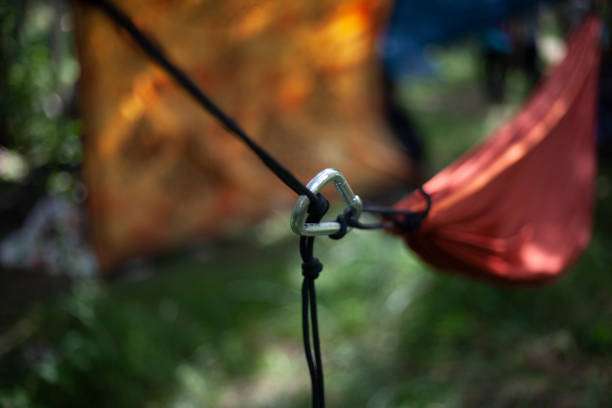
- Hardware Aging: Long-term exposure to sun and rain causes nylon fiber aging or undetected micro-cracks in metal buckles. Any weak link in the suspension system is a failure point for the whole setup.
Building Your “Safety Triangle”: Core Principles for Pro Players
Safe hammock use can be summarized into a stable “Safety Triangle” model, consisting of three inseparable pillars:
Pillar I: Reliable Anchor Points (Protect the Tree, Protect Yourself)
This is your first and most important line of defense.
- Always use wide tree straps: Choose specialized straps at least 5 cm (2 inches) wide. This distributes pressure and prevents girdling. This is the baseline of outdoor ethics.
- Check your tree: Choose healthy, sturdy living trees (recommended diameter over 20 cm). Avoid dead branches, ant nests, or fragile bark. Ensure the trunk can handle lateral tension.
- Height off the ground: The ideal suspension point is roughly at a height you can easily reach. The bottom of the hammock should ultimately be 30-50 cm off the ground.
[Discover the ultimate gear for your next adventure: Browse Professional Safety-Rated Hammocks]
Pillar II: Correct Installation (Create a “Smile,” Not a “Cry”)
- Find the perfect curve: Once installed, the hammock should sag naturally into a soft curve resembling a “smile.” Ideally, pressing down in the middle should reach hip height.
- Angle is key: The angle between the suspension line and the ground should be approximately 30 degrees. This optimizes weight distribution and reduces lateral stress on the tree.
- Pre-check every link: Before lying down, forcefully tug on all connection points (strap-buckle-hammock) to check for stability or unusual noises.
Pillar III: Qualified Products and Prudent Use
- Weight capacity—always leave a margin: Multiply the total weight of you and your gear by a 1.5x safety factor. A hammock made of aviation-grade ripstop nylon with a 250kg rating provides a generous safety margin.
- Smooth entry and exit: Hold both edges, lower your center of gravity, and sit slowly. Avoid jumping in. When leaving, turn sideways, find the ground with your feet, and push up with your hands.
- Regular inspection: Treat it like a climbing rope. Check for fraying fabric, loose stitching, or deformed buckles regularly.
Case Focus: When “Safety” Becomes the Core of Design
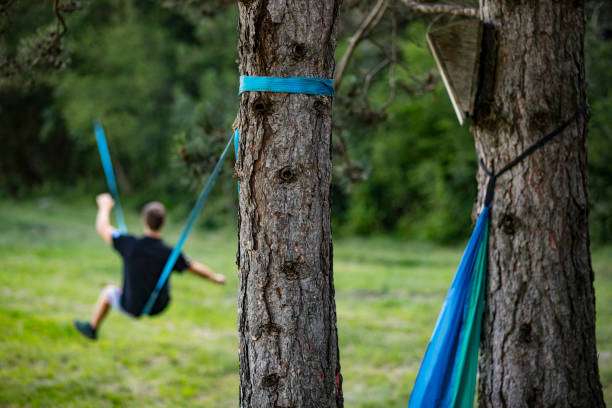
Understanding the Safety Triangle, let’s see how an outdoor mosquito hammock that integrates safety into its design reflects these principles.
| Feature | Safety Benefit |
|---|---|
| Anti-slip Textured Straps | Firmly “bites” the trunk to prevent accidental sliding and falls. |
| Aviation-Grade Ripstop Nylon | Resists tear expansion and provides a 250kg weight capacity redundancy. |
| UV & Moisture Resistance | Slows down material brittling and aging caused by sun and humidity. |
| One-Minute Rapid Setup | Reduces human error by making correct installation intuitive and easy. |
Safety Tips for Special Scenarios and Groups
- Children’s Use: Must be under constant adult supervision. Hang the hammock closer to the ground (15-20 cm) over soft grass or a mat.
- Overnight Camping: Set up a waterproof tarp above the hammock and ensure all gear is secured. Always have a backup plan (like a tent).
- Public Places: Strictly follow park regulations. Your elegant and safe use sets a good example for all hammock enthusiasts.
Frequently Asked Questions (FAQ)
Q: If a hammock is rated for 300kg, does it mean it can safely hold 300kg?
A: This is a critical safety distinction. Rated capacity is often the ultimate breaking point, not the recommended use weight. Safe practice suggests daily use should not exceed 80% of the rating to account for dynamic impact.
Q: How often should I check my hammock system?
A: Perform a quick visual check before every use. Every 20-30 uses or once a year, conduct a thorough inspection: feel the fabric for thin spots and check metal parts for cracks or rust.
Q: What if I can’t use straps (e.g., on a very thick old tree)?
A: If the trunk is too thick for standard straps, the correct action is to find another tree. Never compromise with thin ropes or wires. Safety has no room for “making do.”
Conclusion: Care is an Extension of Love and Wisdom
The premise of enjoying a relaxing time in an outdoor hammock is giving it the respect and professional treatment it deserves.
Safety is not a set of restrictive rules; it is the foundation that allows the fun to continue and bloom with peace of mind. It is a habit that is easy to form—an attitude of responsibility toward yourself, others, and nature.
The next time you unfold your favorite hammock, remember the “Safety Triangle.” Spend those extra few minutes choosing the right tree, fastening the straps carefully, and adjusting that perfect “smile” curve.
Then, you can completely relax, close your eyes, and truly immerse yourself in the wind, the birdsong, and that burden-free sway.
Because you know that all your peace of mind is built upon thorough preparation. This is the wisdom of outdoor leisure, and the most stable, happiest posture suspended between heaven and earth.